National Flower of Peru : The Cantuta and Why It Matters

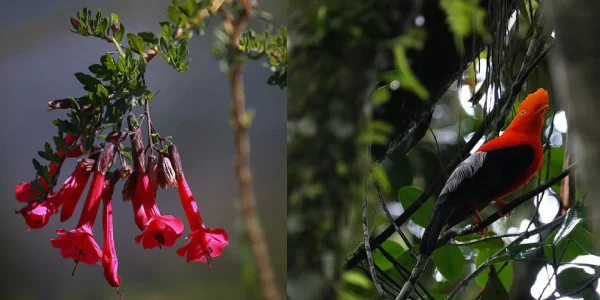
The national flower of Peru is the Cantuta (Cantua buxifolia), a brightly colored tubular flower native to the Andean highlands. It grows between 2,500 and 3,800 meters above sea level, blooms in shades of red, pink, yellow, and orange, and has been sacred to Andean communities since the Inca Empire. The Peruvian government officially declared it the national flower in 1942, and today it remains one of the country's most recognized natural symbols.
If you've spent any time looking into Peru's national symbols, you've probably come across the Cantuta somewhere — on government seals, in tourism brochures, or woven into traditional textiles. But there's more to this flower than just being a national emblem. Its roots go back centuries, its colors carry spiritual meaning, and it grows in some of the most extreme environments on the planet.
What Is the National Flower of Peru?
The Cantuta belongs to the family Polemoniaceae and grows as a shrub that can reach 2 to 4 meters in height. It thrives in the cool, moist conditions of the cloud forests and Andean valleys, where temperatures stay mild and mist is frequent.
It's not just a pretty flower. The Cantuta has been part of Andean culture for centuries, long before Peru existed as a country. The Inca considered it sacred, and its significance has survived into the modern era as a national symbol that appears on everything from currency to traditional celebrations.
What the Cantuta Looks Like
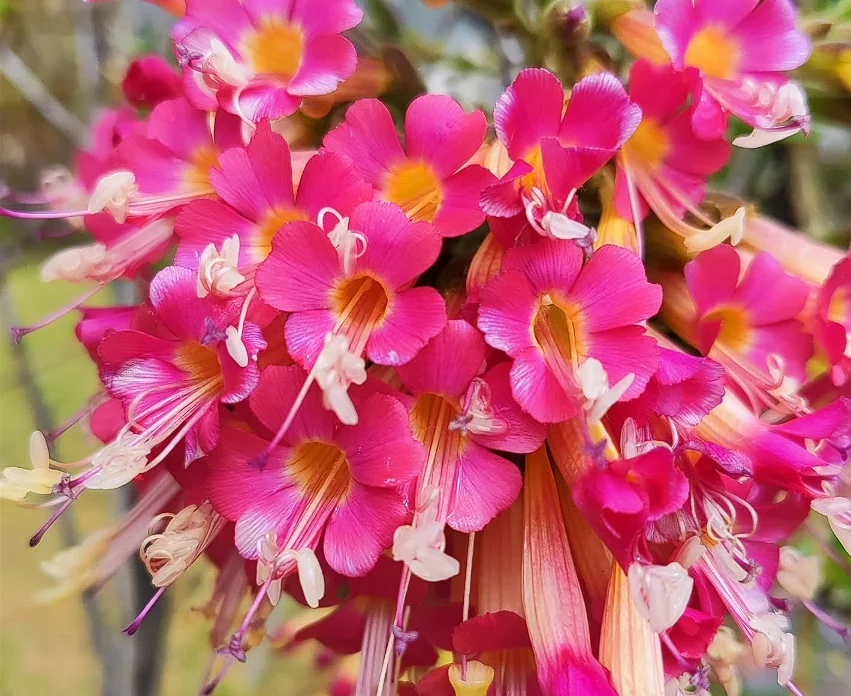
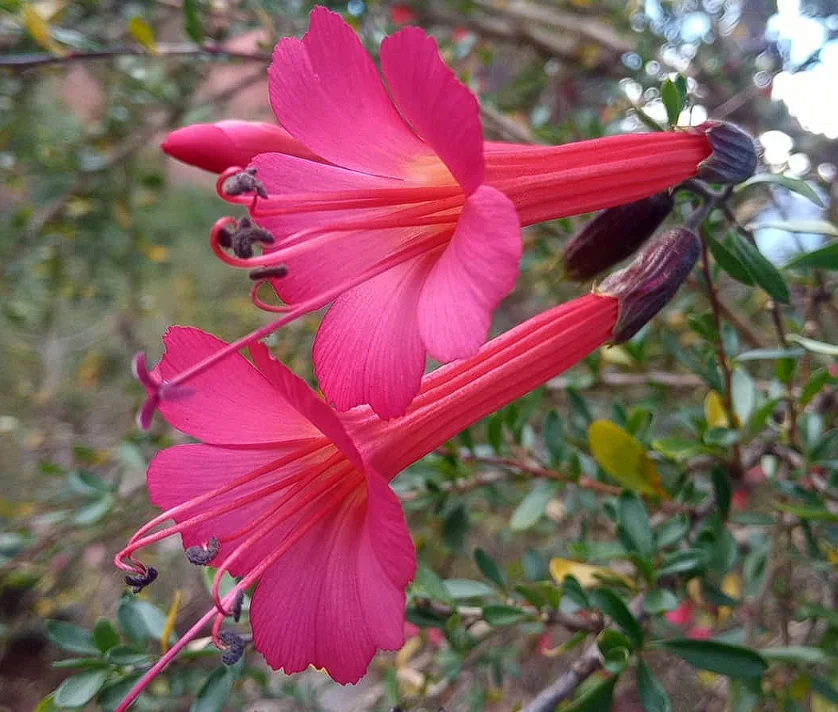
The Cantuta produces clusters of tubular flowers that hang downward from the branches, almost like small bells. Each flower is about 4 to 7 centimeters long and has a narrow tube that flares into five petals at the end.
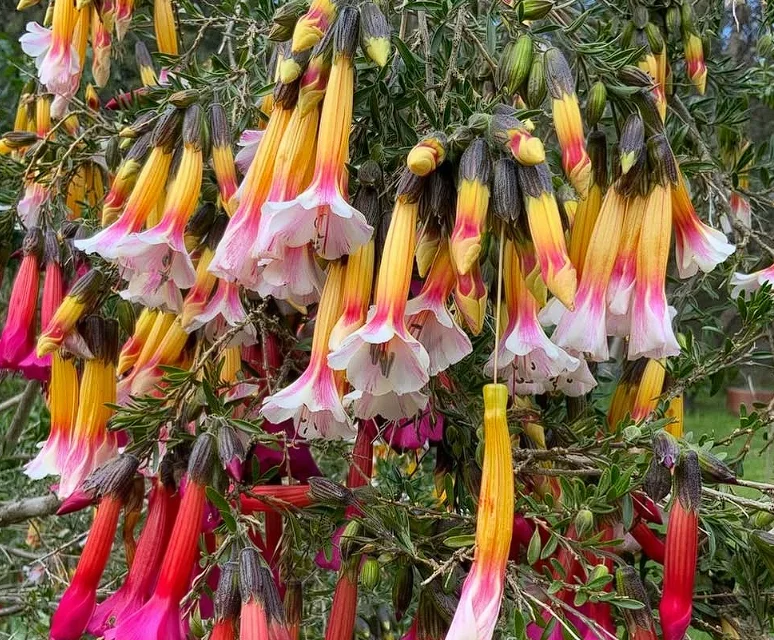
The most common color is a deep red-pink, but wild varieties also produce yellow, orange, and occasionally white blooms. The red and yellow varieties together mirror the colors of the Peruvian flag — which is not a coincidence in terms of cultural symbolism.
The leaves are small, narrow, and evergreen, growing densely along the stems. The overall shape of the plant is bushy and somewhat sprawling, which helps it survive in windy Andean conditions where taller plants would get battered.
When in bloom — typically during the rainy season from November through March — the Cantuta is visually striking. The bright flowers against the green Andean slopes are one of the most photographed natural scenes in highland Peru.
Where the Name Comes From
The name "Cantuta" comes from the Quechua word Qantu (also spelled Ccantu or Kantu), which refers to the flower itself and has been used by Andean communities for centuries. The Spanish adapted the Quechua name during colonization, and it stuck.
The scientific name, Cantua buxifolia, was assigned by the French botanist Aimé Bonpland in the early 19th century during his travels through South America with Alexander von Humboldt. "Buxifolia" refers to the shape of the leaves, which resemble those of the boxwood plant (Buxus).
Some sources also refer to it as the "Sacred Flower of the Incas" or the "Magic Flower of the Andes," both of which reflect its cultural importance rather than its botanical classification.
Why Is the Cantuta the National Flower of Peru?
The Cantuta was officially declared Peru's national flower by law in 1942. But its significance goes back much further than any government decree.
Its Sacred Role in Inca Culture
For the Inca, the Cantuta was one of the most sacred plants in their world. It was associated with Inti, the sun god, and was used in religious ceremonies, offerings, and rituals tied to agriculture and fertility.
The flower was planted around temples and sacred sites. Its red and yellow colors symbolized blood and gold — two elements central to Inca cosmology. Priests and royalty wore Cantuta flowers during ceremonies, and the plant was often depicted in Inca pottery, textiles, and metalwork.
The Inca didn't just appreciate the Cantuta for its beauty. They believed the flower had spiritual energy — that it connected the physical world to the divine. Offering Cantuta flowers to the gods was a way to ensure good harvests, healthy livestock, and protection from natural disasters.
After the Spanish conquest, the Cantuta's role in indigenous ceremonies didn't disappear. It was incorporated into Catholic festivals that blended Andean and Christian traditions — a process called syncretism that's still visible in Peruvian celebrations today. During festivals like Inti Raymi (the Festival of the Sun) in Cusco, Cantuta flowers are still used as decorations and offerings.
How It Became an Official Symbol
The push to officially recognize the Cantuta as Peru's national flower came in the early 20th century, alongside a broader movement to celebrate Peru's indigenous heritage and pre-Columbian history. At the time, the country was actively defining its national identity through symbols that reflected its Andean roots rather than just its colonial past.
On October 8, 1942, the Peruvian government formally declared the Cantuta as the national flower through a supreme resolution. The choice was straightforward — no other flower carried the same historical weight, cultural significance, or geographic connection to Peru's highlands.
The Cantuta appears on Peruvian government seals, is referenced in official cultural programs, and is a fixture in national celebrations, particularly those with Andean themes. It's also a popular subject in Peruvian art, tourism marketing, and educational materials.
Where Does the Cantuta Grow?
The Cantuta isn't easy to find unless you know where to look — and you're willing to climb.
Andean Regions and Altitude
The Cantuta grows naturally along the eastern slopes of the Andes in Peru and Bolivia, primarily in the departments of Cusco, Puno, Junín, Huancavelica, and Ayacucho. It prefers altitudes between 2,500 and 3,800 meters, which places it in the "quechua" and "suni" ecological zones — areas with cool temperatures, regular rainfall, and misty cloud forests.
The plant grows on hillsides, in forest clearings, along riverbanks, and sometimes near ruins. It's not uncommon to see Cantuta flowers growing near Inca archaeological sites, which makes sense given that the Inca deliberately cultivated them in those areas.
In Cusco, the heartland of the former Inca Empire, the Cantuta is particularly common in the Sacred Valley, around Pisac, and on the slopes between Cusco and Paucartambo. During the rainy season, the hillsides in these areas explode with color, and much of that color comes from wild Cantuta blooms.
The flower's natural range extends slightly into Bolivia, particularly in the La Paz and Cochabamba departments, where similar Andean conditions exist. But Peru is the center of both the plant's distribution and its cultural significance.
Can You Grow It Outside Peru?
Yes, but it's not easy. The Cantuta is adapted to very specific conditions — cool temperatures, high humidity, well-drained soil, and altitude. Trying to grow it in a typical garden at sea level in a temperate or tropical climate is usually unsuccessful.
That said, dedicated growers in places like the UK, the Pacific Northwest of the United States, and parts of Australia and New Zealand have had some success growing Cantuta in greenhouses or cool conservatories. The plant needs:
- Cool temperatures: Ideally between 10°C and 20°C. It does not tolerate heat well.
- High humidity: Cloud forest conditions, not arid or dry heat.
- Well-drained soil: Slightly acidic, rich in organic matter.
- Partial shade: Too much direct sun at low altitudes can scorch the leaves.
- Patience: The plant is slow-growing and can take several years to reach flowering size from seed.
Seeds can sometimes be found through specialty Andean plant nurseries or online seed exchanges. Cuttings can also be taken from established plants, though rooting success is variable.
For most people outside Peru, the easiest way to see a Cantuta in person is to visit a botanical garden with a cloud forest or Andean plant collection. But nothing compares to seeing them wild on a misty hillside outside Cusco.
The National Bird and Flower of Peru
Peru has more than one national symbol, and the Cantuta doesn't stand alone. It shares its status as a national emblem with the Andean Cock-of-the-rock (Rupicola peruvianus) — Peru's national bird.
The Andean Cockatoo and the Cantuta as Twin Symbols
The Andean Cock of the rock is a striking bird with bright orange-red plumage, a prominent fan-shaped crest, and a dramatic presence. Males gather in groups called "leks" to perform elaborate courtship dances in the cloud forest, flashing their colors and calling to attract females.
The overlap between the national bird and the national flower is more than visual — both are found in the same habitat. The Cock-of-the-rock lives in the cloud forests of the eastern Andes, typically between 1,000 and 2,400 meters. The Cantuta grows just above that range, starting around 2,500 meters. Together, they represent the Andean cloud forest ecosystem — the most biodiverse zone in Peru.
Both symbols also share a color story. The Cock-of-the-rock's orange-red feathers and the Cantuta's red-pink blooms echo the red on Peru's national flag. Whether this was a deliberate choice when the symbols were selected or a happy coincidence is debatable, but the visual connection is powerful.
For travelers visiting the Manu Road — the highway from Cusco down to the Amazon lowlands — there's a stretch where you pass through both the Cock-of-the-rock's habitat and the Cantuta's range within a few hours. It's one of the best places in Peru to see both national symbols in a single trip.
Other Emblematic Flowers of Peru
The Cantuta gets the official title, but Peru is home to thousands of flowering plant species, many of which hold cultural, economic, or ecological significance. Here are a few that stand out.
The Orchid
Peru has over 3,000 documented orchid species, making it one of the most orchid-rich countries on Earth. Most grow in the cloud forests of the eastern Andes, and new species are discovered almost every year. The most famous Peruvian orchid is Cattleya rex, a large, deep magenta species discovered in 1926 near the Río Putina valley in Puno.
Orchid tourism is growing in Peru, particularly along the Inca Trail (which passes through orchid-rich cloud forest), around Chachapoyas in the north, and on the Manu Road. Many eco-lodges in these areas now offer guided orchid walks as part of their activity programs.
While orchids don't hold the official national title, they're arguably Peru's most significant flower in terms of biodiversity. The country's orchid diversity is a major reason why Peruvian cloud forests are considered globally important conservation areas.
The Amancaes
The Amancaes (Ismene amancaes) is a yellow, lily-like flower that blooms on the hillsides surrounding Lima during the winter months — June through September. In a city that's mostly grey and dry for most of the year, the sudden appearance of yellow flowers on the coastal hills is a genuine event.
The Amancaes was historically celebrated with large festivals in the 18th and 19th centuries, where Limeños would gather on the hills to eat, drink, and enjoy the bloom. The tradition faded as Lima grew and the hills were built over, but efforts to revive the festival have gained momentum in recent years.
The Cerro Amancaes area in the Rímac district is now a protected historical reserve, partly to preserve the flower's natural habitat. For visitors in Lima during the winter, a trip to see the Amancaes bloom is one of the city's most unique — and least touristy — experiences.
The Mashua
Mashua (Tropaeolum tuberosum) is a tuber plant that grows at extreme altitudes — up to 4,500 meters — where almost nothing else survives. Its bright orange and red flowers are striking, but most Andean farmers grow it for its edible tubers rather than its looks.
The Inca cultivated mashua as a staple crop, and it remains common in highland markets in Peru and Bolivia. The tubers have a peppery, slightly sweet flavor and are eaten boiled, roasted, or in soups. In recent years, mashua has attracted attention from health food researchers due to studies suggesting anti-inflammatory and antioxidant properties.
The flowers are edible too — they have a peppery taste similar to nasturtiums and are sometimes used as garnishes in high-end Peruvian restaurants. But in most of the Andes, mashua is still humble peasant food, not a culinary trend. That's part of its charm.
Frequently Asked Questions
What Is the National Flower of Peru?
The Cantuta (Cantua buxifolia). It is a tubular flower native to the Andean highlands that blooms in red, pink, yellow, and orange. The Peruvian government declared it the national flower in 1942 because of its deep roots in Inca culture and its connection to the Andean region.
Why Is the Cantuta Peru's National Flower?
Because the Inca considered it sacred. The flower was associated with Inti, the sun god, and was used in religious ceremonies, temple offerings, and royal rituals. Its red and yellow colors mirror the Peruvian flag. In 1942, the government made it official as part of a movement to celebrate Peru's indigenous heritage.
Where Does the Cantuta Grow in Peru?
Along the eastern slopes of the Andes, between 2,500 and 3,800 meters above sea level. It is most common in the departments of Cusco, Puno, Junín, Huancavelica, and Ayacucho. The best place to see it wild is the Sacred Valley and the hillsides between Cusco and Paucartambo during the rainy season from November through March.
Is the Cantuta the Same as the Kantuta?
Yes. Both names come from the Quechua word Qantu. "Cantuta" is the standard spelling in Spanish and English. "Kantuta" is more common in Quechua-language contexts and in Bolivia. The official botanical name is Cantua buxifolia.
Can You Buy Cantuta Flowers Outside Peru?
It is very difficult. The Cantuta has no commercial cultivation industry like roses or Alstroemeria. Inside Peru, you can sometimes find fresh-cut stems at Cusco's San Pedro Market during rainy season. Outside Peru, they are mostly limited to botanical garden collections or specialty Andean plant growers in the UK and the Pacific Northwest of the United States.