What Pachamama Means and How the Incas Honored the Earth Goddess
Pachamama is one of the most important deities in Andean spirituality, and her worship stretches back centuries before the Inca Empire even existed. Understanding who she is and how she is still honored today in Peru, Bolivia, and Ecuador helps explain a tradition that remains very much alive in the Andes.
What Is Pachamama
The Meaning of Pachamama in Quechua
The word Pachamama comes from Quechua, the language of the Inca Empire, and combines two terms.
| Quechua term | Meaning |
|---|---|
| Pacha | Earth, world, universe, time |
| Mama | Mother |
| Pachamama | "Mother Earth" / "Mother of the World" |
Put together, Pachamama is usually translated as "Mother Earth," although the concept is broader than soil or land — it also carries the sense of time, space, and the natural cycle of life.
Where Pachamama Comes From in Andean Culture
Pachamama's worship did not start with the Incas. Pre-Inca cultures such as the Tiwanaku and the Wari already revered the earth as a living, sacred force long before the Inca Empire expanded across the Andes in the 13th century. The Incas absorbed this belief into their own religious system and elevated Pachamama to one of the central figures of their cosmology.
How Pachamama Was Worshipped by the Incas
For the Inca, nature was never lifeless. Pachamama was seen as a conscious being who could reward her people with good weather, healthy crops, and protection, but who could also bring drought, earthquakes, or illness if she was neglected. To keep her favor, the Incas performed regular ceremonies known as "pagos," or payments to the earth, offering food, coca leaves, and drink in exchange for fertility and stability. This exchange reflects "ayni," the Andean principle of reciprocity that governed both social and spiritual life: whatever is received from the earth must eventually be given back.
Pachamama as the Goddess of Fertility and the Earth
Pachamama was considered the feminine force of nature, closely tied to agriculture, harvests, and childbirth. In Inca cosmology, she complemented Inti, the sun god, and his consort the moon; while the sky gods ruled from above, Pachamama governed from below as the source of all sustenance. She is typically depicted as an adult woman holding crops such as corn, potatoes, or coca leaves — a visual reminder of her role as provider.
Pachamama Rituals Explained
What Happens During a Pachamama Ritual
A Pachamama ritual generally follows the same sequence of steps, regardless of the region:
- Choosing the site — usually a mountain, spring, or archaeological location with a clear view of the Apus, or mountain spirits.
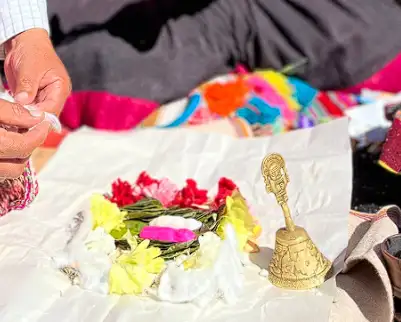
- Preparing the despacho — a ceremonial bundle of symbolic offerings assembled by hand.
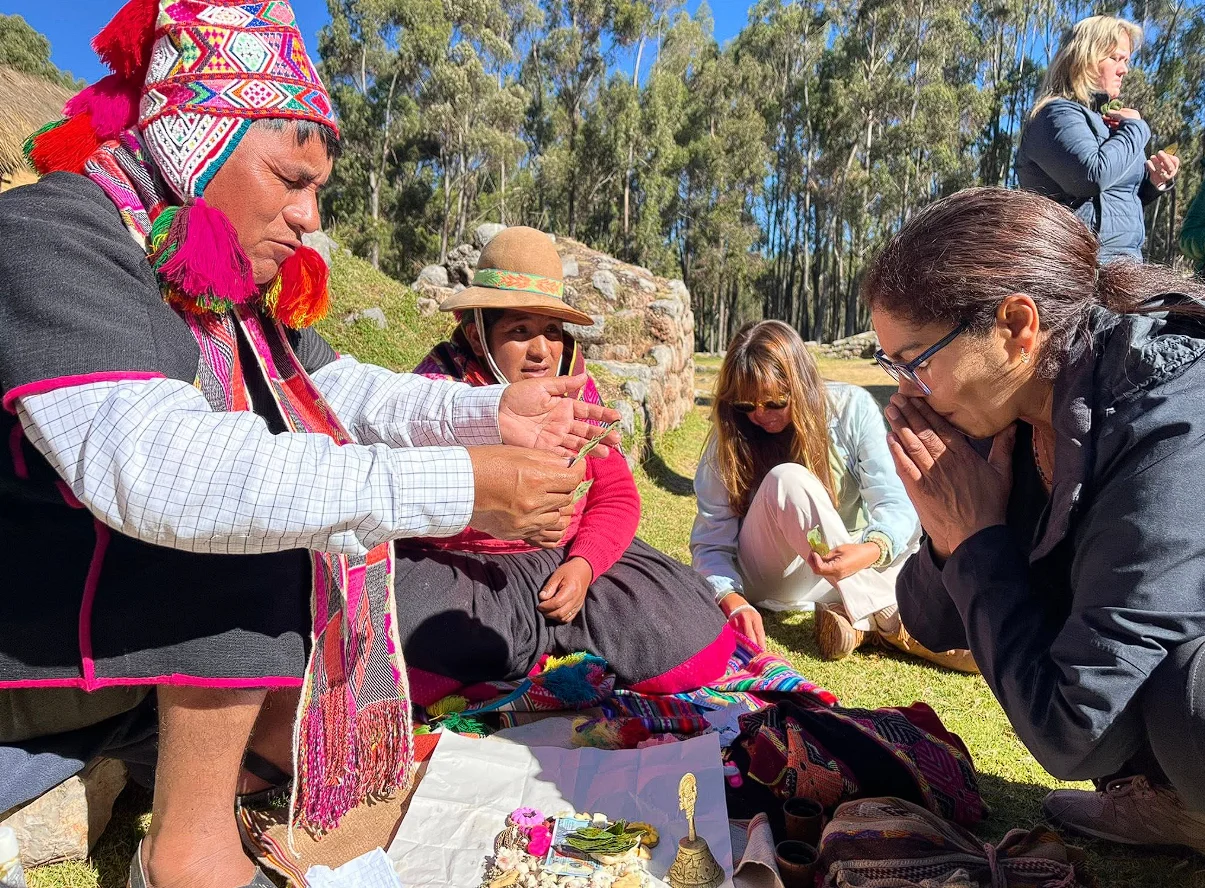
- The k'intu offering — three coca leaves handed to each participant to begin the ritual.
- Placing the offering — the despacho is arranged together with the coca leaves and drinks such as chicha.
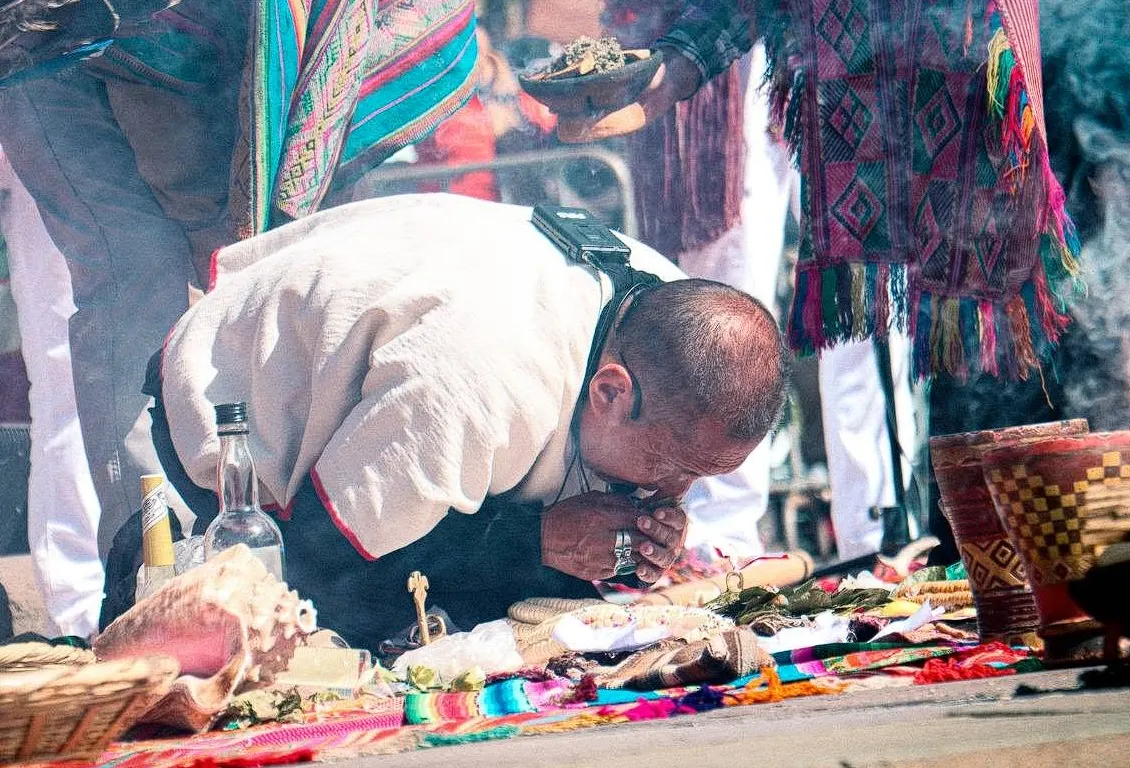
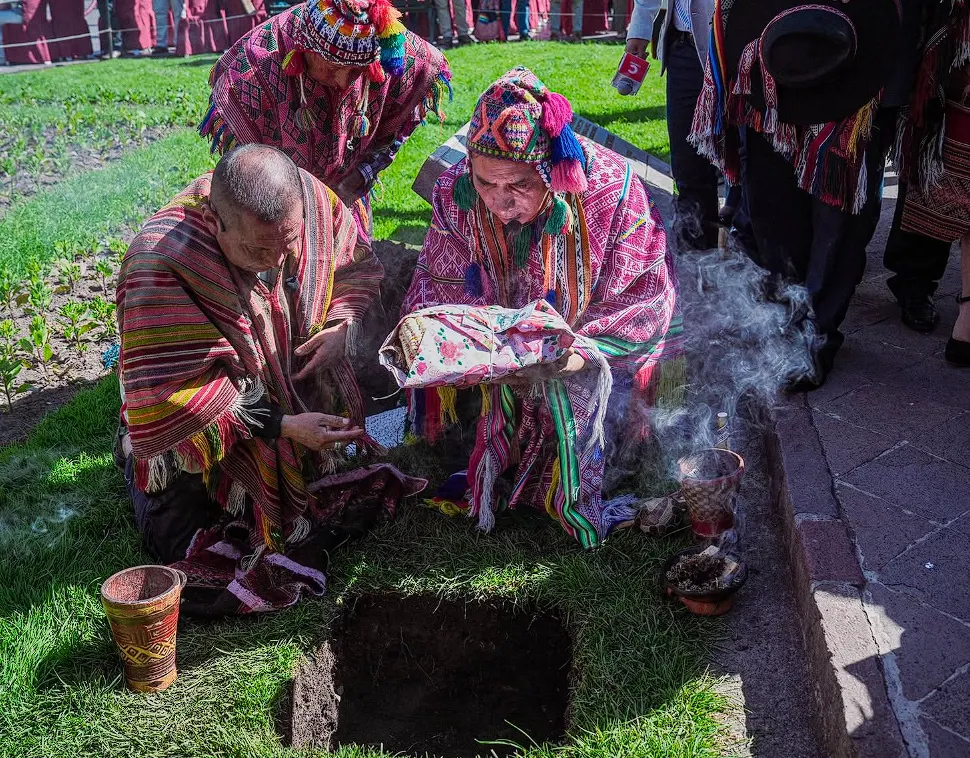
- Returning it to the earth — the bundle is buried, burned, or submerged in water, depending on the tradition and location.
- Community celebration — food, music, and dance close the ceremony.
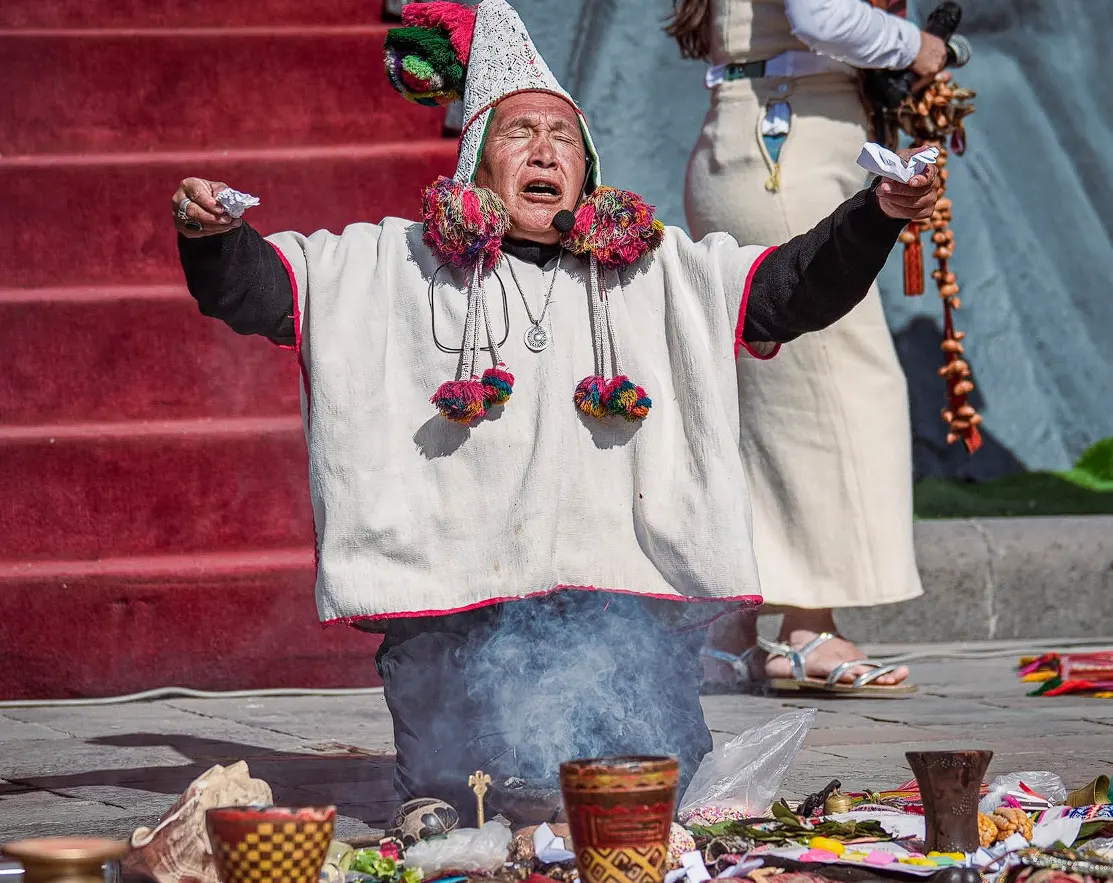
The ceremony is usually led by a "paqo," an Andean ritual specialist trained in these traditions.
Priest Ranks Who Perform the Ceremony
Not every officiant holds the same authority. Andean ritual specialists are traditionally organized into ranks based on their training and experience:
| Rank | Role |
|---|---|
| Pampamisayoq | Performs simpler, everyday offerings at ground level |
| Altomisayoq / Hatunmisayoq | Senior priest reserved for the most important ceremonies |
Reaching the higher ranks is described as a long and demanding process of spiritual training.
The Pago a la Tierra Offering to the Earth
The best-known ritual is the "Pago a la Tierra," literally "payment to the earth." It begins with the k'intu, a small bundle of three coca leaves that the officiant hands to each participant. Those leaves, along with additional offerings, are arranged into a despacho, a ceremonial package later given back to Pachamama as an act of gratitude and request.
What the Incas Offered to Pachamama
Historical offerings recorded by chroniclers include:
- Chicha (fermented maize beer)
- Coca leaves
- Llama fat
- Corn and seeds
- Huayruro seeds, believed to protect against earthquakes
- In extreme cases (famine, drought, or the death of an emperor), animal sacrifice and, rarely, the Capacocha ceremony involving children from noble families
These accounts illustrate how seriously the Incas treated their relationship with the earth during moments of crisis.
Foods and Objects Used in Modern Offerings
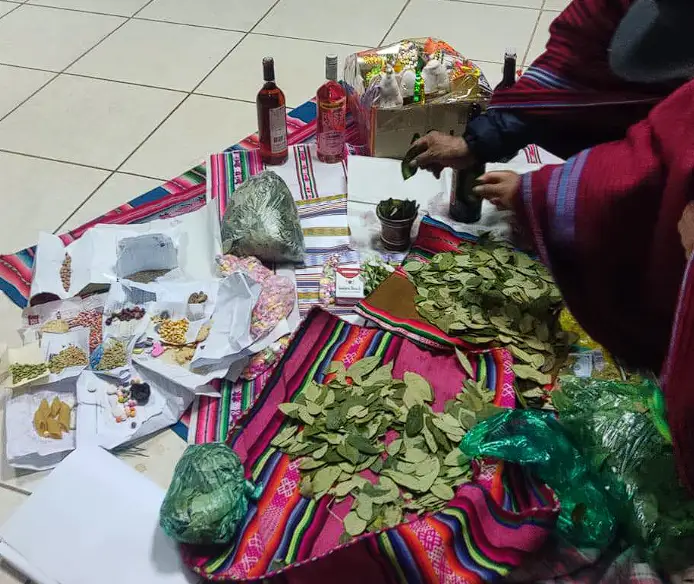
Today's despachos still include many of the same elements used historically:
| Offering | Symbolic meaning |
|---|---|
| Coca leaves | Spiritual connection with Pachamama and the Apus |
| Corn / grains | Prosperity, abundance |
| Sweets | Bringing "sweetness" into life |
| Flowers | Beauty, gratitude |
| Seashells | Connection to water and distant origins |
| Llama wool or fat | Strength, protection of livestock |
| Huayruro seeds | Protection against misfortune |
Every object placed in the offering is chosen deliberately, and the arrangement itself is considered part of the ritual's effectiveness.
Pachamama Ceremonies Around the Andes
The Challa Ceremony and What It Represents
The challa is a ritual practiced especially in Bolivia and parts of Peru and northern Argentina, consisting of pouring chicha or another drink onto the ground before consuming it, as a way of thanking Pachamama for her protection. It is one of the simplest and most widespread expressions of gratitude toward the earth, performed both in formal ceremonies and in everyday life.
Why Pachamama Day Is Celebrated on August 1st
August 1st marks the most important date in the Pachamama calendar, often called the Feast of Pachamama or Día de la Pachamama.
- Why this date — according to Andean belief, this is the day "the earth opens her mouth" to receive offerings and requests.
- Agricultural link — August marks a resting period between harvest and planting, making it the symbolic moment to prepare the soil for the new cycle.
- Duration — in many regions, rituals continue throughout the entire month of August, not just on the first day.
How Andean Communities Celebrate Pachamama Today
Communities across Cusco, Puno, Ayacucho, and the Sacred Valley in Peru, as well as large parts of Bolivia and the Ecuadorian highlands, still hold both private, family-based offerings and larger community ceremonies led by an Andean priest. Celebrations often include music, dance, and shared food, and in cities like Cusco it remains common to see families placing yellow flowers or confetti around their homes and burning incense as part of the tradition.
The Three Worlds Behind Pachamama
Andean cosmology divides the universe into three interconnected realms, which help explain why Pachamama occupies such a central place in Inca belief.
| Realm | Meaning | Connection to Pachamama |
|---|---|---|
| Hanan Pacha | Upper world, home of Inti (sun) and Mama Killa (moon) | Governs weather, seasons, and timing that affect the land |
| Kay Pacha | Middle world, everyday physical reality | Where Pachamama lives and where offerings are physically made |
| Uku Pacha | Inner or underworld, linked to ancestors | Receives buried offerings and connects the living to the dead |
Rituals to Pachamama are understood as a way of maintaining balance across all three realms at once, not simply "honoring the ground."
Other Names Pachamama Is Known By
Regional Names and Variations
While "Pachamama" is the most widely used term, she is sometimes referred to regionally as "Pacha Mama" (two words) or simply "the Pacha." In some communities, people also speak of the Apu, the male mountain spirit believed to fertilize Pachamama, together forming a masculine-feminine duality similar to other pairs in Andean cosmology, such as Inti and Mama Killa.
Is Pachamama the Same as Mother Earth
| Western "Mother Earth" | Andean Pachamama | |
|---|---|---|
| Nature is seen as | A resource to manage | A living, relational being |
| Relationship | Ownership, control | Reciprocity, balance |
| Interaction | Conservation policy | Ritual offering and gratitude |
Pachamama is often translated simply as "Mother Earth," but the Andean concept is broader than the Western idea of nature as a resource — it is closer to a family relationship than a transaction.
Pachamama and the Catholic Church
Why Pope Francis Mentioned Pachamama
| Year | Event |
|---|---|
| 2019 | Wooden statues representing Pachamama appear at events tied to the Amazon Synod in the Vatican |
| 2019 | The statues are removed from a church and thrown into the Tiber River by individuals opposed to their presence |
| Since 2019 | The episode remains a reference point in debates about Indigenous symbols within Catholic worship |
Is Honoring Pachamama Compatible with Catholicism
Following the Spanish conquest and a large-scale evangelization campaign in the 16th century, many sacred sites linked to Pachamama were destroyed or reinterpreted under Catholic symbolism. Despite this, devotion to Pachamama survived and blended with Christian practice rather than disappearing. In much of the Andes today, families combine Catholic prayer with offerings to Pachamama, treating the two traditions as complementary rather than contradictory.
Frequently Asked Questions
What does Pachamama mean?
Pachamama means "Mother Earth" in Quechua, combining "pacha" (earth, world, time) and "mama" (mother).
What did the Incas believe about Pachamama?
The Incas believed Pachamama was a living, conscious force capable of rewarding or punishing humans depending on how well she was honored, and central to the empire's agricultural survival.
What happens in a Pachamama ritual?
A typical ritual involves selecting a sacred site, preparing a despacho of symbolic offerings such as coca leaves, corn, and sweets, and returning that offering to the earth by burying or burning it, usually led by an Andean priest.
Why is Pachamama linked to the Vatican controversy?
Pachamama became a subject of global debate after wooden statues representing her were displayed during the 2019 Amazon Synod in Rome and were later removed by critics.
Is Pachamama still worshipped today?
Yes. Pachamama remains central to daily and ceremonial life in Peru, Bolivia, and Ecuador, particularly in Andean highland communities, where rituals are performed both privately at home and collectively during Pachamama Day each August 1st.