The Peruvian Booby, Peru's Striking Coastal Bird and Its Famous Dance

If you've ever taken a boat tour along the Peruvian coast, chances are you've already seen thousands of these birds without knowing their name. The Peruvian booby is the single most abundant seabird on Peru's coastline, and it plays a bigger role in the country's history and economy than most visitors realize, thanks to the guano industry it helped build over the last two centuries. This guide covers everything worth knowing about the species: how to identify it, where it lives, why its mating dance draws so much attention, and exactly where to go if you want to see one for yourself.
What Is the Peruvian Booby?
The Peruvian booby, scientifically named Sula variegata, is a seabird endemic to the cold waters of the Pacific coast of South America, and it happens to be the most abundant seabird species along the Peruvian coast and the second most important guano-producing bird in the region. It belongs to the same family as gannets and other boobies, a group best known for their spectacular plunge-diving hunting style.
Where the Name Comes From
The word "booby" traces back to the Spanish term "bobo," meaning foolish or clumsy, a nickname sailors gave the bird because of its awkward movements on land and its habit of landing on ships without much caution. The scientific name variegata is Latin for "of various colors," a nod to the bird's patterned, multi-toned plumage rather than a single solid coat.
What the Peruvian Booby Looks Like
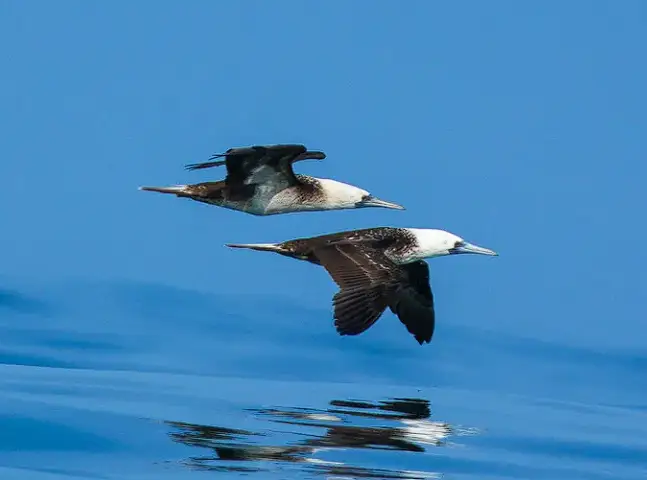
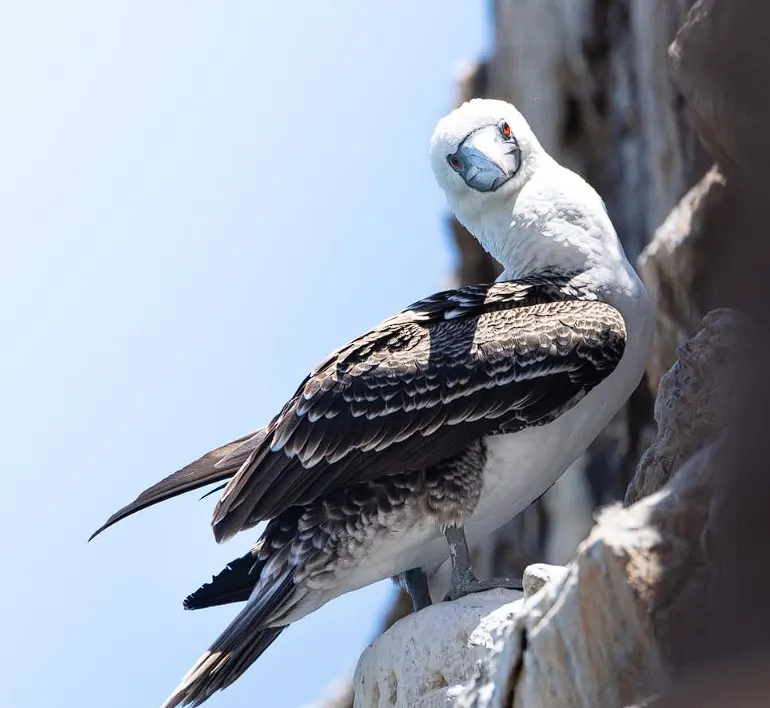
The Peruvian booby has a body built for speed and precision diving rather than land mobility. Its upperparts are a rich, dark brown, while the head and underparts are a clean white, and the wings show a mottled, scale-like pattern created by white-tipped feathers along the coverts.
Its bill is long, pointed, and grey, matching its grey webbed feet, which stand out immediately when compared to the brightly colored feet of its close relatives. Females are noticeably larger than males, running about 19% heavier with wings roughly 4% bigger, a difference subtle enough that it usually takes a trained eye to notice.
| Feature | Description |
|---|---|
| Upperparts | Dark brown |
| Head and underparts | White |
| Wings | White mottling with scale-like pattern |
| Bill | Long, pointed, grey |
| Feet | Grey, webbed |
| Size difference | Females ~19% heavier than males |
Peruvian Booby vs Blue Footed Booby
These two species are often confused with one another, especially by visitors who've heard of the Galápagos' famous blue-footed booby and assume every booby they see in Peru is the same bird.
Are They the Same Species?
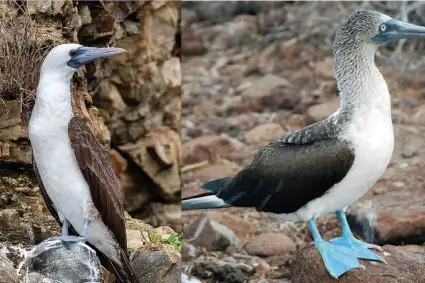
No, they're not, and this is one of the most common points of confusion for anyone researching Peruvian boobies. Both belong to the genus Sula, which puts them in the same broader family tree, but they are fully separated species with different ranges, different foot colors, and different population strongholds.
The blue-footed booby is best known from the Galápagos Islands, though it does also nest along parts of the Peruvian coast, while the Peruvian booby is a coastal endemic almost entirely tied to the Humboldt Current system. So while they're close relatives that can occasionally be spotted in the same general area, they are not the same bird, and telling them apart comes down mostly to foot color and range.
Key Differences You Can Spot
| Feature | Peruvian Booby | Blue Footed Booby |
|---|---|---|
| Feet color | Grey | Bright blue |
| Range | Endemic to the Humboldt Current coast | Wider range, including Galápagos and parts of Peru's coast |
| Population size | Historically in the millions | Smaller, more dispersed colonies |
| Guano importance | Major historic guano producer | Minor role in guano industry |
| Most famous trait | Guano production, huge colonies | Bright blue feet, courtship walk |
Where Do Peruvian Boobies Live?
Peruvian boobies are found exclusively along the western coast of South America, from southern Colombia down to southern Chile, with their main breeding grounds concentrated between northern Peru and central Chile.
The Humboldt Current and Why It Matters
The entire life cycle of this species is tied to the Humboldt Current, the cold, nutrient-rich ocean current that runs along South America's Pacific coast and fuels one of the richest marine ecosystems on the planet.
This current keeps water temperatures low and pulls nutrients up from the ocean floor, which in turn supports massive schools of anchoveta, the small fish that make up the bulk of the booby's diet. Without the Humboldt Current, neither the birds nor Peru's historic fishing industry would exist at the scale they do today.
Nesting Colonies Along the Peruvian Coast
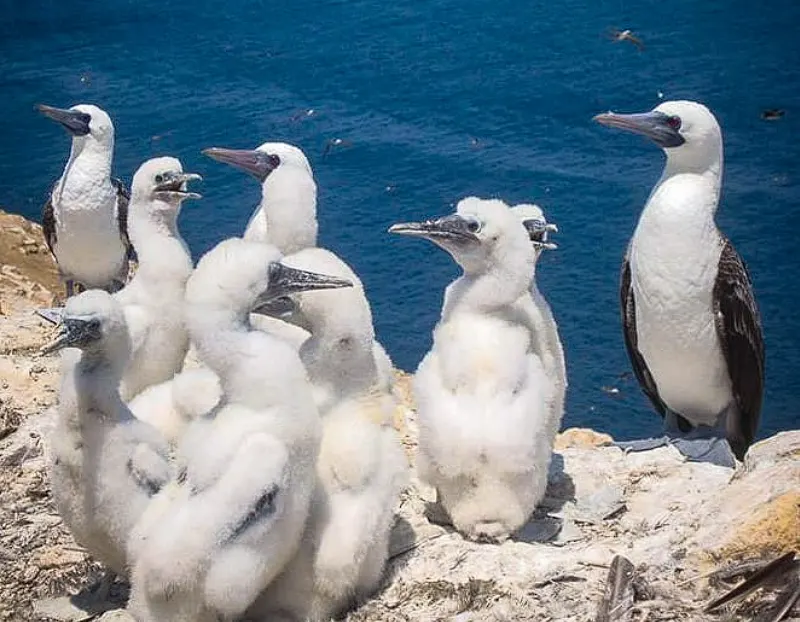
Peruvian boobies nest in dense colonies on coastal cliffs and small offshore islands, often alongside other guano-producing seabirds like cormorants and pelicans. Colony sizes can be enormous: some breeding aggregations of this species have been estimated at close to a million breeding pairs, making them one of the largest seabird colonies of any species anywhere in the world. These islands are typically protected as national reserves precisely because of how important they are for both the birds and Peru's guano economy.
The Peruvian Booby Mating Dance
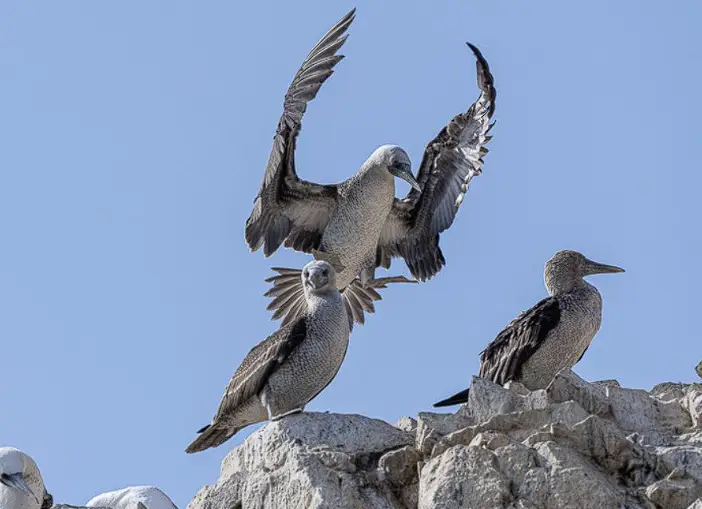
Courtship among Peruvian boobies is a highly visual, almost theatrical process, similar in spirit to the famous strutting displays of their blue-footed relatives.
Males perform a sequence of movements to attract a mate, including sky-pointing with the bill raised and wings spread, exaggerated foot-lifting steps, and whistling calls, all performed at close range within the crowded colony.
Because colonies are so densely packed, this display also functions as a way for a male to defend his small nesting territory from rivals while simultaneously trying to impress a potential partner. Once paired, both parents share incubation duties, taking turns over incubation stints that can last anywhere from half a day to over two days at a time before switching.
What Do Peruvian Boobies Eat?
The diet of the Peruvian booby is almost entirely made up of small schooling fish, with Peruvian anchoveta forming the overwhelming majority of what they eat. They hunt using a plunge-diving technique, spotting prey from the air and folding their wings back to dive at high speed straight into the water, sometimes in coordinated groups that can number in the hundreds when a large school of fish is located near the surface. This feeding strategy is efficient but also makes the species extremely sensitive to changes in fish stocks, whether from overfishing or shifts in ocean temperature.
Peruvian Booby Conservation and Population
El Niño and Its Impact on Boobies
El Niño events are the single biggest natural threat to Peruvian booby populations. During these events, ocean surface temperatures can rise several degrees above average, currents shift, and the cold, nutrient-rich water that anchoveta depend on becomes scarce, which in turn causes booby breeding success and survival rates to drop sharply.
Historical population data shows just how dramatic the swings can be: during the mid-twentieth century, the species' total population reached an estimated 3 million birds, a number that has fluctuated considerably since due to a combination of El Niño events and commercial overfishing of anchoveta.
Current Conservation Status
The Peruvian booby is currently listed as Least Concern on the IUCN Red List, which reflects an overall stable population rather than an endangered one. That said, the species remains vulnerable to long-term pressure from overfishing of its main prey species and the recurring impact of El Niño events, so "stable" doesn't mean the population is immune to future decline if either of those pressures intensifies.
Where to See Peruvian Boobies in Peru
Ballestas Islands
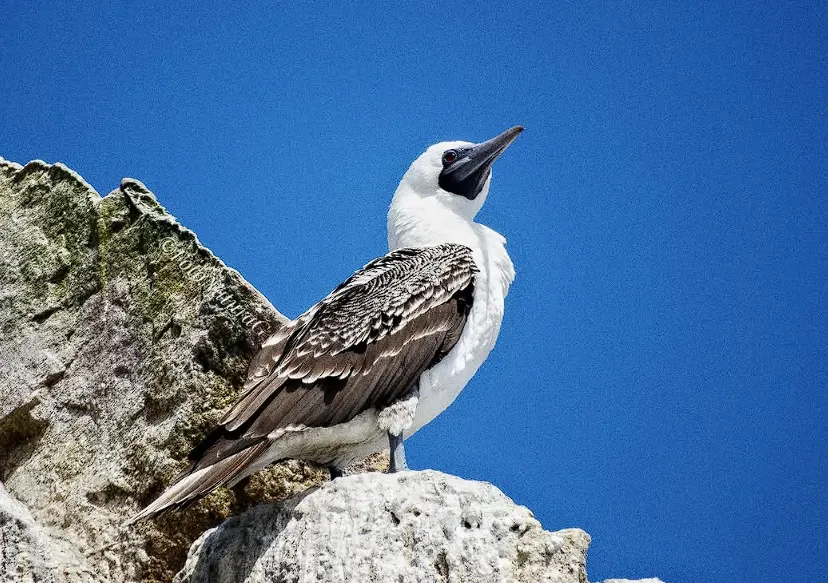
The Ballestas Islands, just off the coast near Paracas, are the single most popular and accessible place to see Peruvian boobies in the country. Boat tours leave daily from Paracas and take visitors close enough to the cliffs to see thousands of birds nesting side by side, often alongside sea lions, Humboldt penguins, and other seabirds sharing the same rocky islands.
Punta San Juan
Located further south in the Ica region, Punta San Juan is one of Peru's most important guano reserves and a key breeding site for the species, though access is more restricted than the Ballestas Islands since it's managed primarily as a protected research and conservation area. It's a better option for those specifically interested in the conservation side of the story rather than a quick photo stop.
Other Coastal Spots
| Location | What You'll Find |
|---|---|
| Ballestas Islands (Paracas) | Easiest access, large colonies, combined wildlife tours |
| Punta San Juan (Ica) | Major guano reserve, restricted access, research-focused |
| Islas Guañape (La Libertad) | Large breeding colonies, less touristic |
| Palomino Islands (Lima) | Closer to Lima, combined with sea lion tours |
Frequently Asked Questions
Is the Peruvian Booby the Same as the Blue Footed Booby?
No. They belong to the same genus, Sula, but they're separate species with different foot colors, different core ranges, and different population sizes. The Peruvian booby has grey feet and is concentrated along Peru's coast, while the blue-footed booby is best known from the Galápagos and has, as the name suggests, bright blue feet.
Why Are They Called Boobies?
The name comes from the Spanish word "bobo," meaning foolish, a nickname given by early sailors because of the bird's clumsy movements on land and its tendency to land on ships without caution, making it easy to catch.
How Many Peruvian Boobies Are Left?
There's no single, constantly updated global count, but the species reached an estimated 3 million individuals during the mid-twentieth century, and its numbers fluctuate significantly depending on El Niño cycles and fishing pressure on anchoveta. It's currently classified as Least Concern, meaning the overall population is considered stable rather than at immediate risk.
Where Can You See Peruvian Boobies Near Lima?
The closest and easiest option from Lima is a boat tour to the Palomino Islands, just off the coast of Callao, where Peruvian boobies nest alongside sea lions and other seabirds. For larger colonies, the Ballestas Islands near Paracas are a few hours south of Lima and remain the most popular day-trip option for seeing the species in large numbers.